





H U M U S project
Ma’Umi MAP Ocean
Ishigaki Island, Okinawa, Japan
30 May-13 June, 2023
Cultivating fertile sensory “gardens” for collaboration and coexistence.
With:
@horne_art_studio
@rumihale
@tatsu.rodoriguez
Lennox Horne
Oberon Horne
@map_ocean
@ff_fujita
@ma_umi_residencies
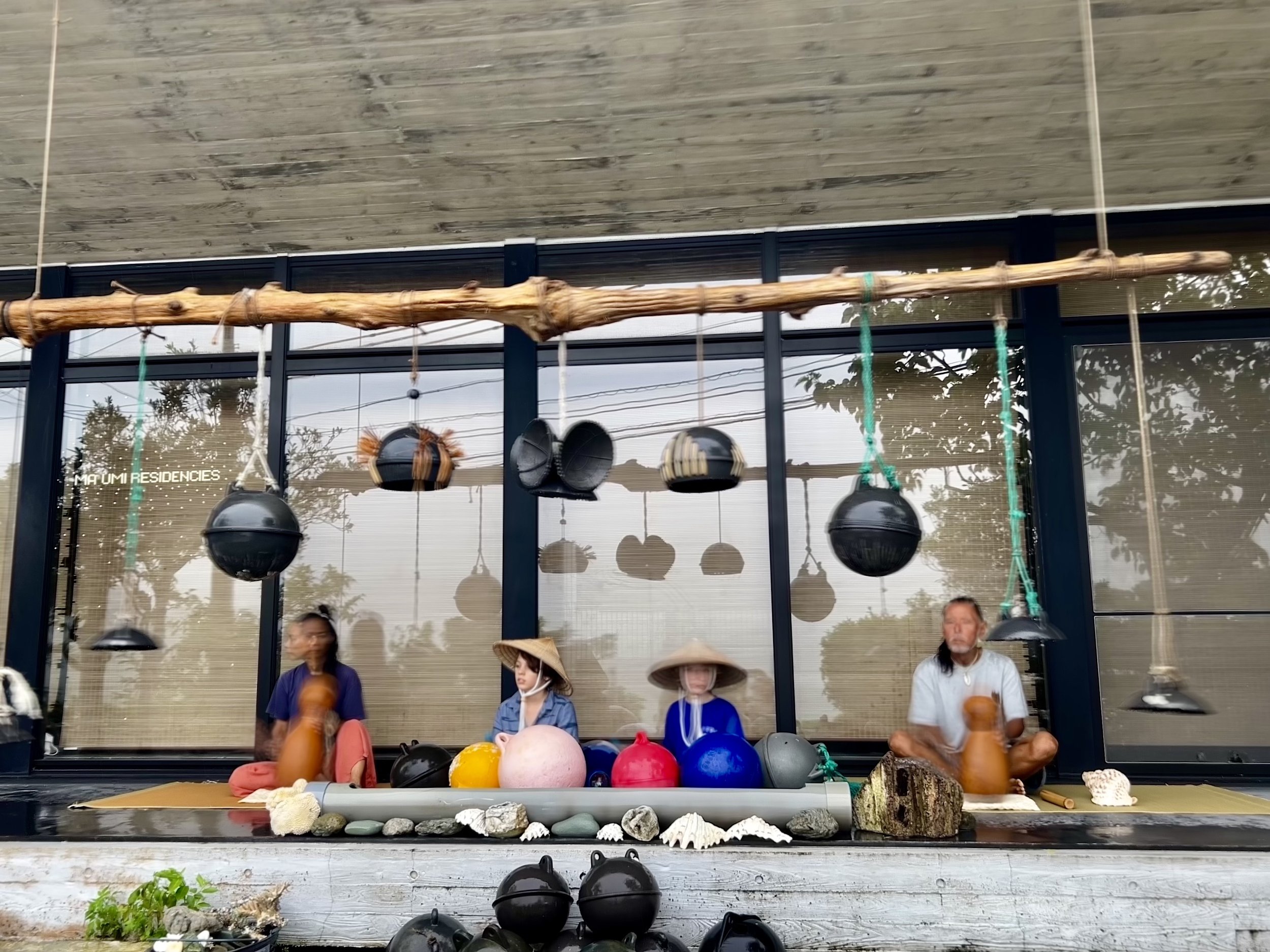
Post typhoon rain
Frogs
Conch shell
Gourd
Bamboo nose flute
Beach detritus
#ishigaki#island#people#humus#project with #rain#frog#chorus cultivating #fertile#gardens for #collaboration#selfassembly#sensory#sonic#garden#elemental#improvisation#noseflute#conch#shell#gourd#music
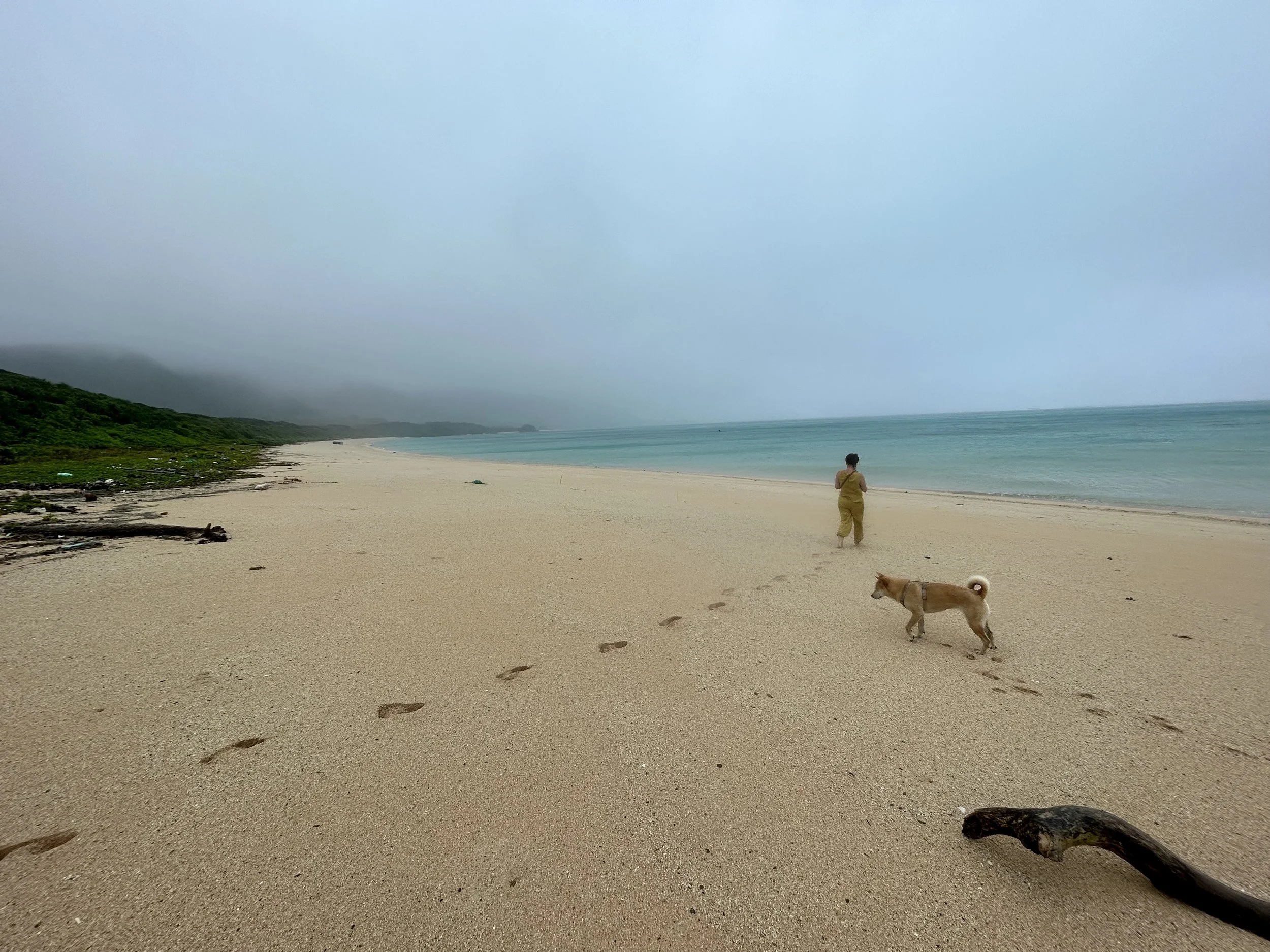
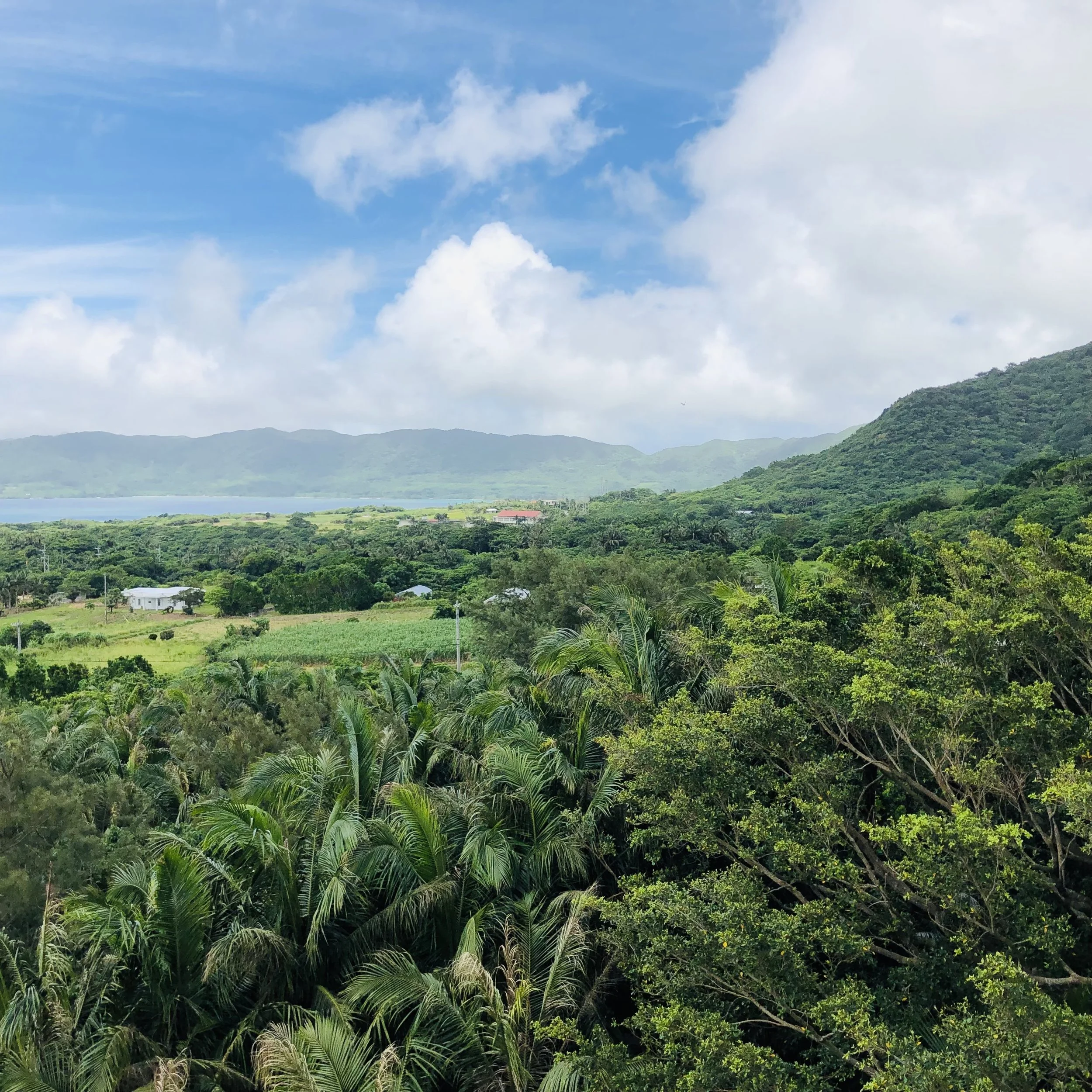
A subtropical island with tangled rainforests, large mangrove communities, azure living waters, ringed by coral reefs. Waves of melodic frog calls, adventuring turtles, piles of hermit crabs. Tides that are crystal clear. And tides that carry in the plastic detritus of Japan, China and South East Asia. Depending on which beach and current have met.
It is home to huge dark night skies and stars that dance up from the horizon. @idadarksky
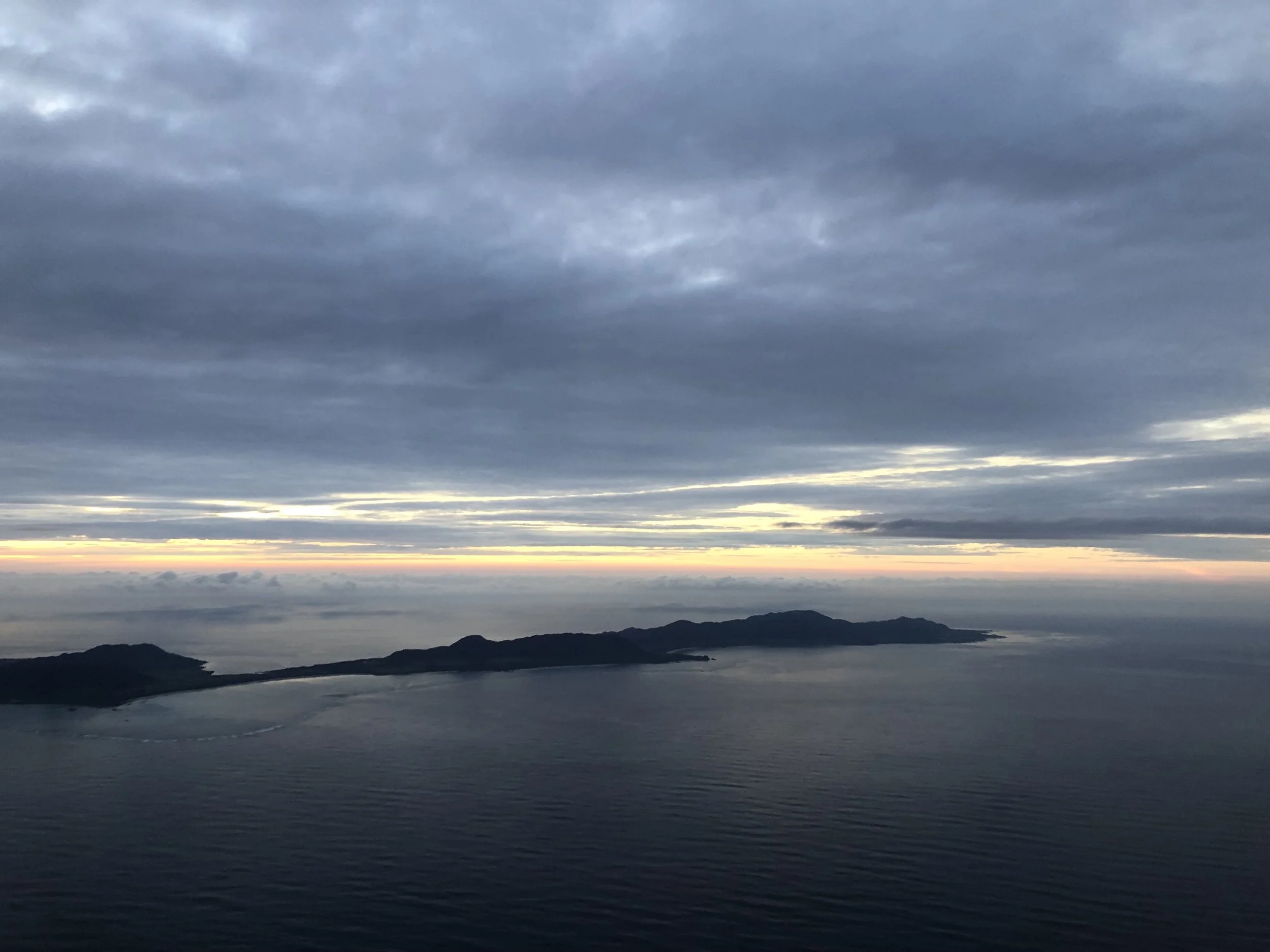
It is the southernmost prefecture and the only tropical rainforest in Japan, 2000 km from Tokyo, 300 km from Taiwan located in the Philippine and East China Sea.
Once a part of the Ryukyuan Kingdom, it was annexed, inclusive of the whole Okinawa prefecture by Japan during the Meiji era (1868-1912).
Ryukyuan people are an East Asian ethnic group that are not recognised by Japan. They have a distinct culture, language, food, and belief system with matrilineal elements. There are notable Ryukyuan diaspora in Hawaii, Bolivia and Brazil.
Ishigaki has been a trading port with Asia for hundreds of years creating a unique eclectic mix of cultural influences, materials and practices. Including:
チャンプルー (chanpurū) or “jumbled mix” of Chinese, Japanese, Southeast Asian, Pacific and Hawaiian/American.
The island nurtures a diverse array of plants, people, animals, stories, cultural practices, ecologies, networks, resilience and phenomena..
Including an incoming typhoon.
Community assembly
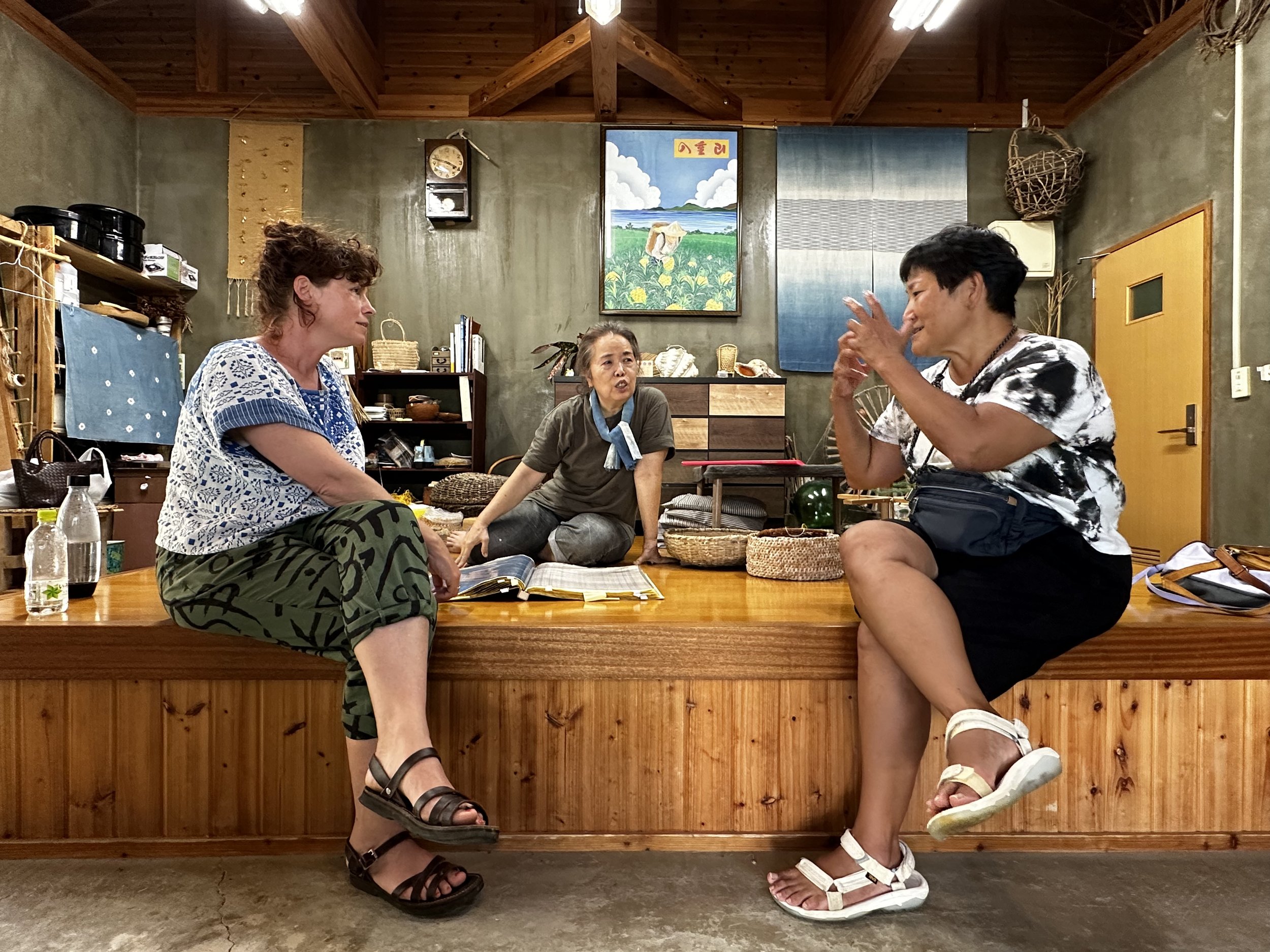
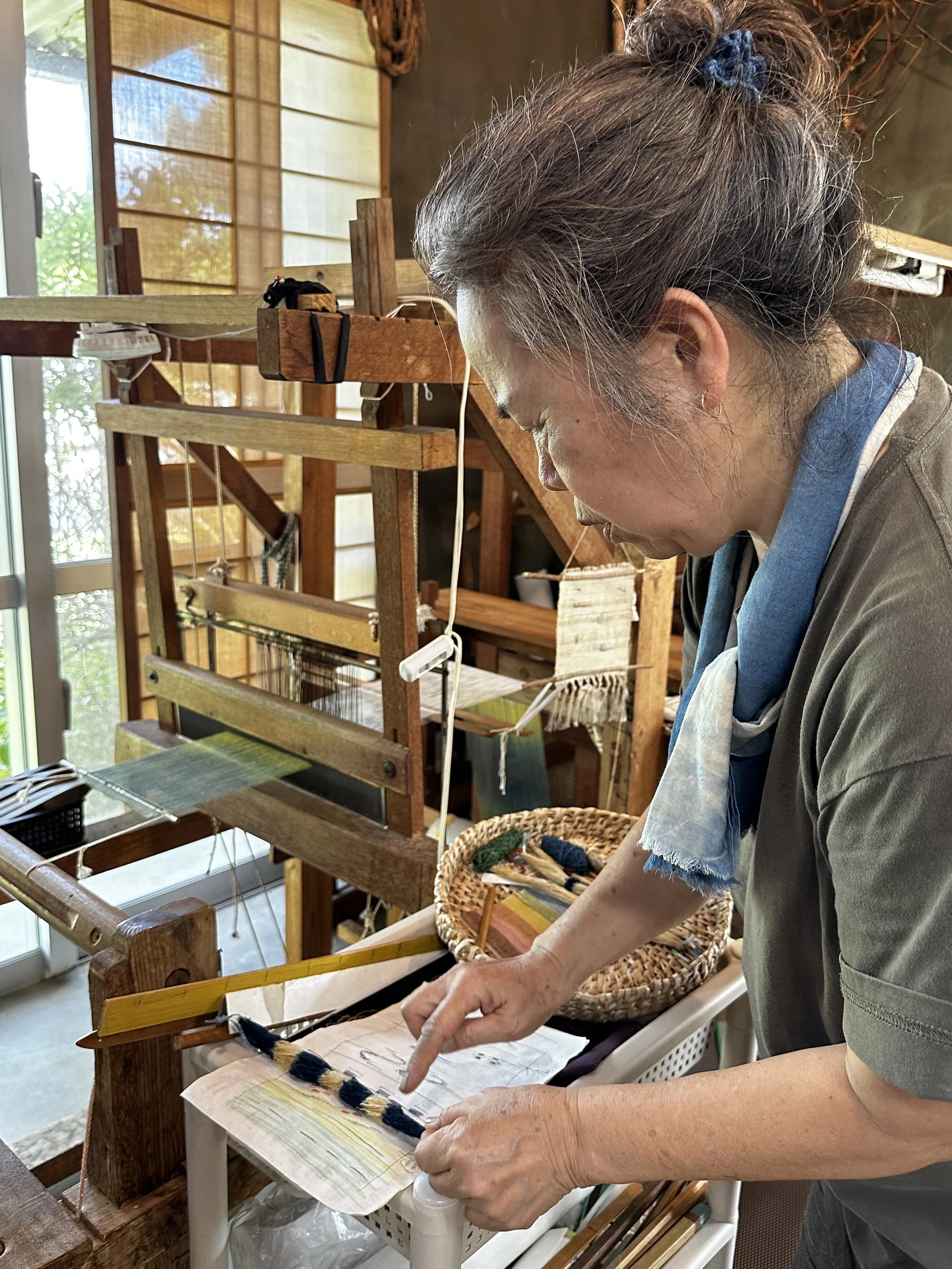
Thank you to master plant weaver of Yaeyama jofu Matsutake San, sharing your unique journey and contribution to your community in Shiraho
Whilst in residency @ma_umi_residencies
With tireless translation by @ff_fujita
For the research + development project H U M U S (30 May- 13 June) with @horne_art_studio and offspring Oberon + Lennox Horne.
Seeing into the relationships between people and plants and the ripple effect into the community and ecologies.
Jofu is the pinnacle of Japanese Asa (ramie) fabric, which for a long time used to be presented to the imperial court and families of the shogunate.
Yaeyama Jofu is made from ramie, a plant from the nettle family which grows to about a metre high, from which the fibre is attained. An incredibly time consuming process of separating and hand twisting the hair like thin strand fibres together by a network of grannies in preparation for the warp and weft threads
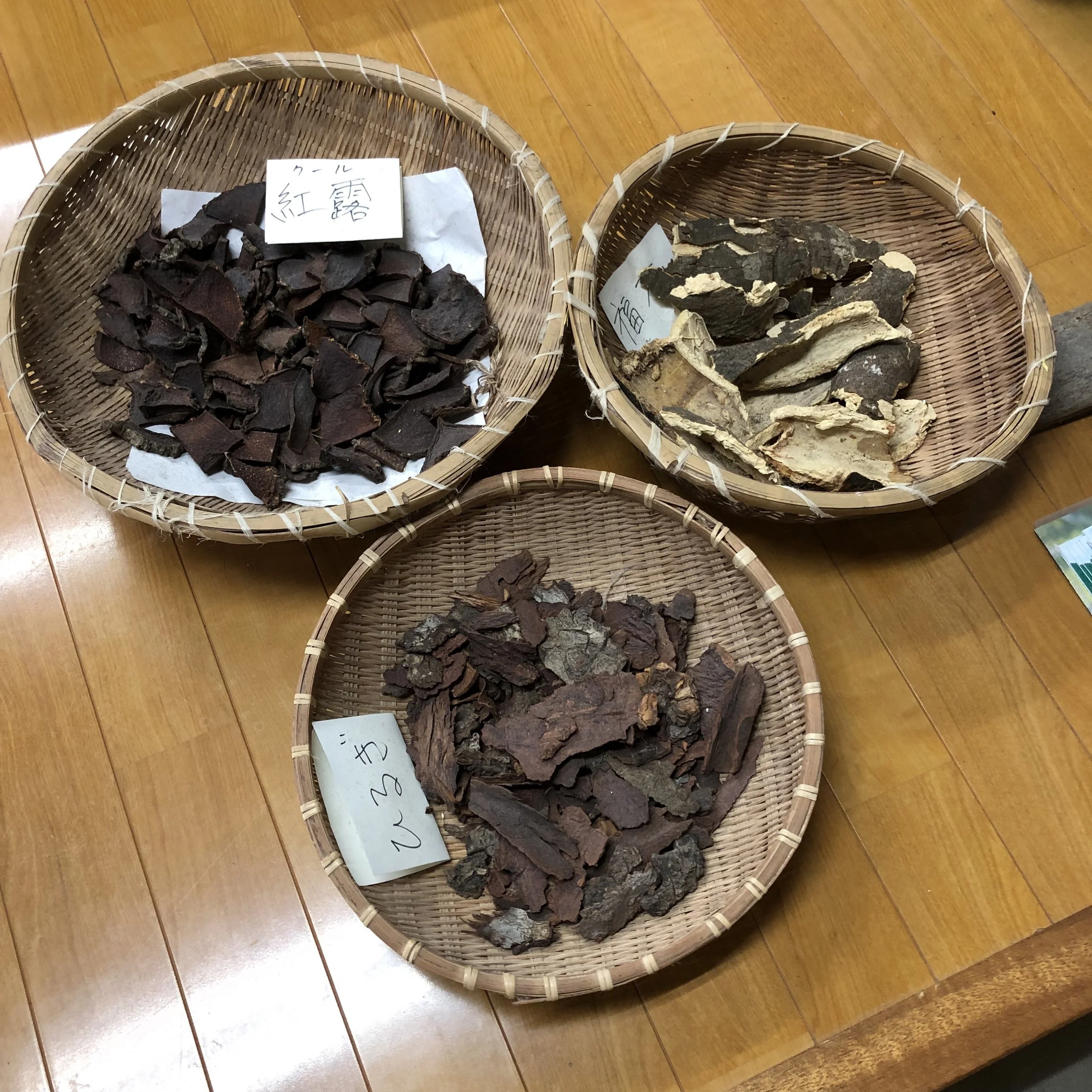
The dye used for Yaeyama jofu is taken mostly from the plants grown in Yaeyama including kuru, Fukugi tree, mangrove, Acacia confusa, and indigo.
The kuru has to be peeled and grated before being put in boiling water, which is strained to get the reddish brown dye. The leaves of Acasia confusa, which is an evergreen in the pea family, are boiled to make dye of multiple shades from pale to vivid yellow.
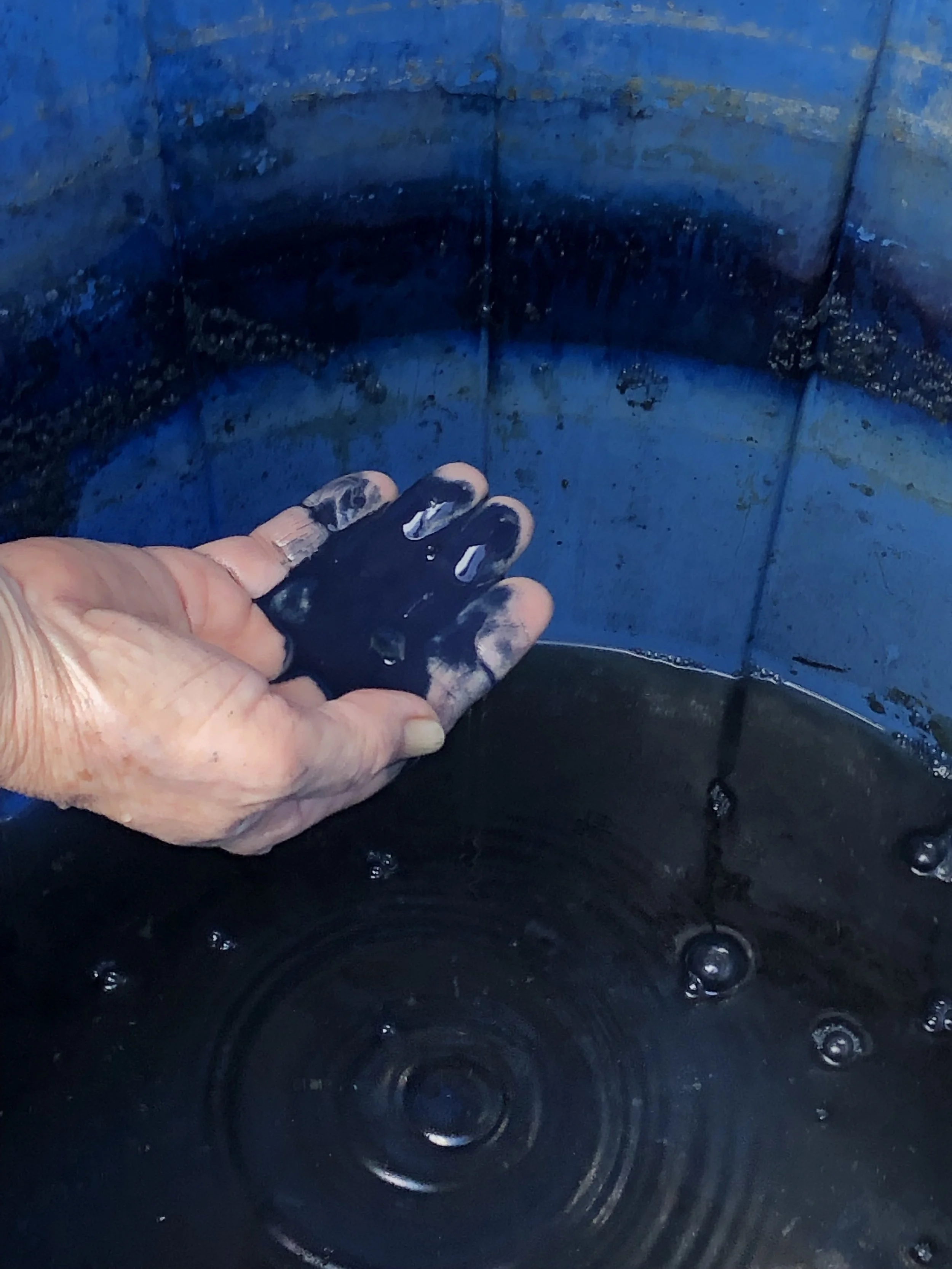
Indigo has to be soaked in water with branches still attached and the liquid is fermented with lime and saké to make the dye.
Ikat or kasuri is used to create the patterns in the warp faced textiles.
#plant #weaving #plantdyes #ramie #asa #yaeyama #jofu #Matsutake #weavers of #ishigaki #island #textile #stories #rafts of #knowledge #woven #together #ocean #respect #artistresidency #community #networks of #grannies #seeding #ideas #humus #art #ecologies #longevity #coral
📷 @map_ocean
Seeing into the relationships between people and community.
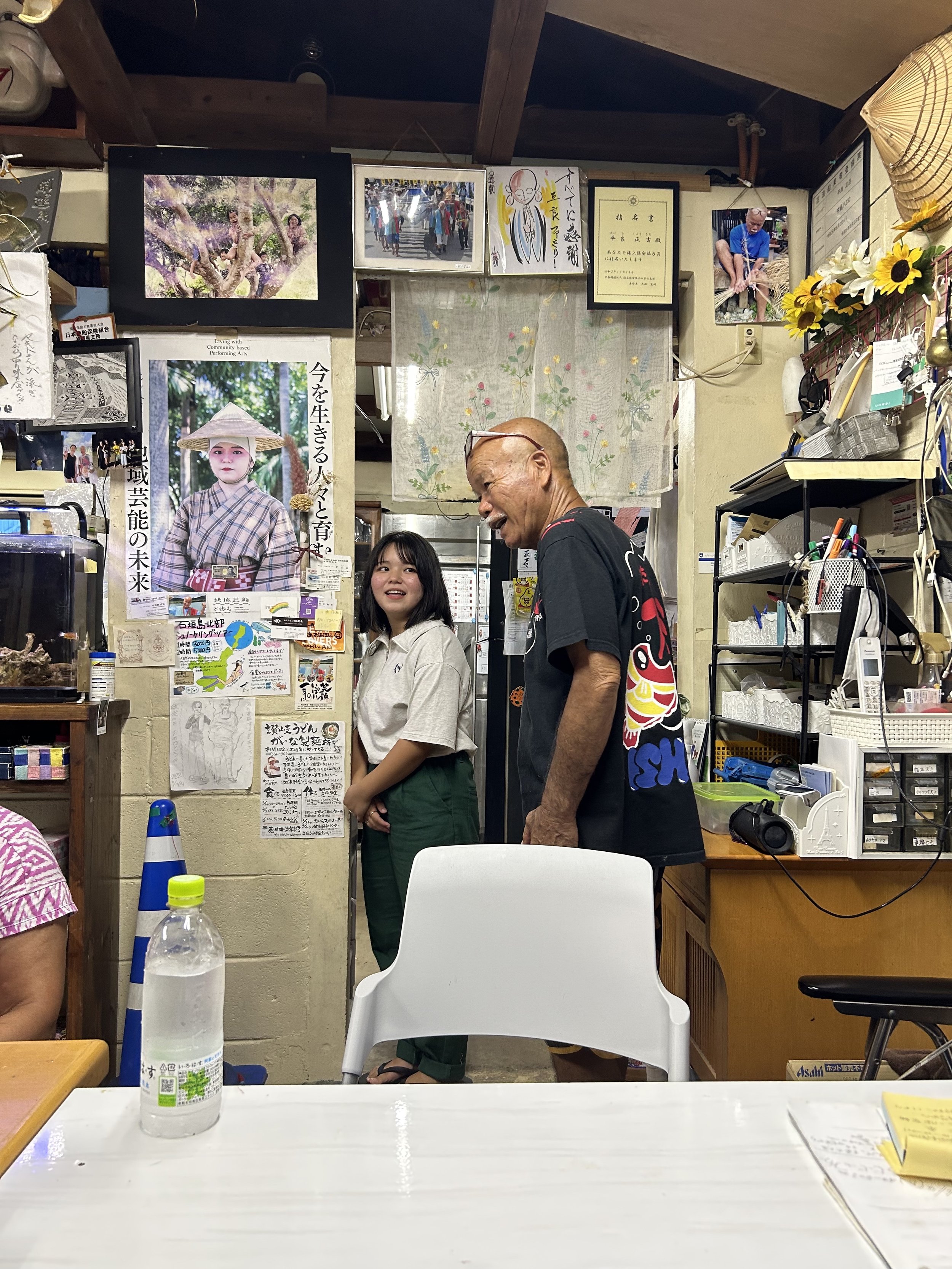
At the heart of Okinawan music is the playing of the 3 stringed Sanshin. Miu Taira, a cultural community performer, plays on the sanshin to her Grandfather’s and our delight. The sanshin was originally made of snakeskin and the Okinawan ebony tree. There is a unique musical transcription system, called the kunkunshi.
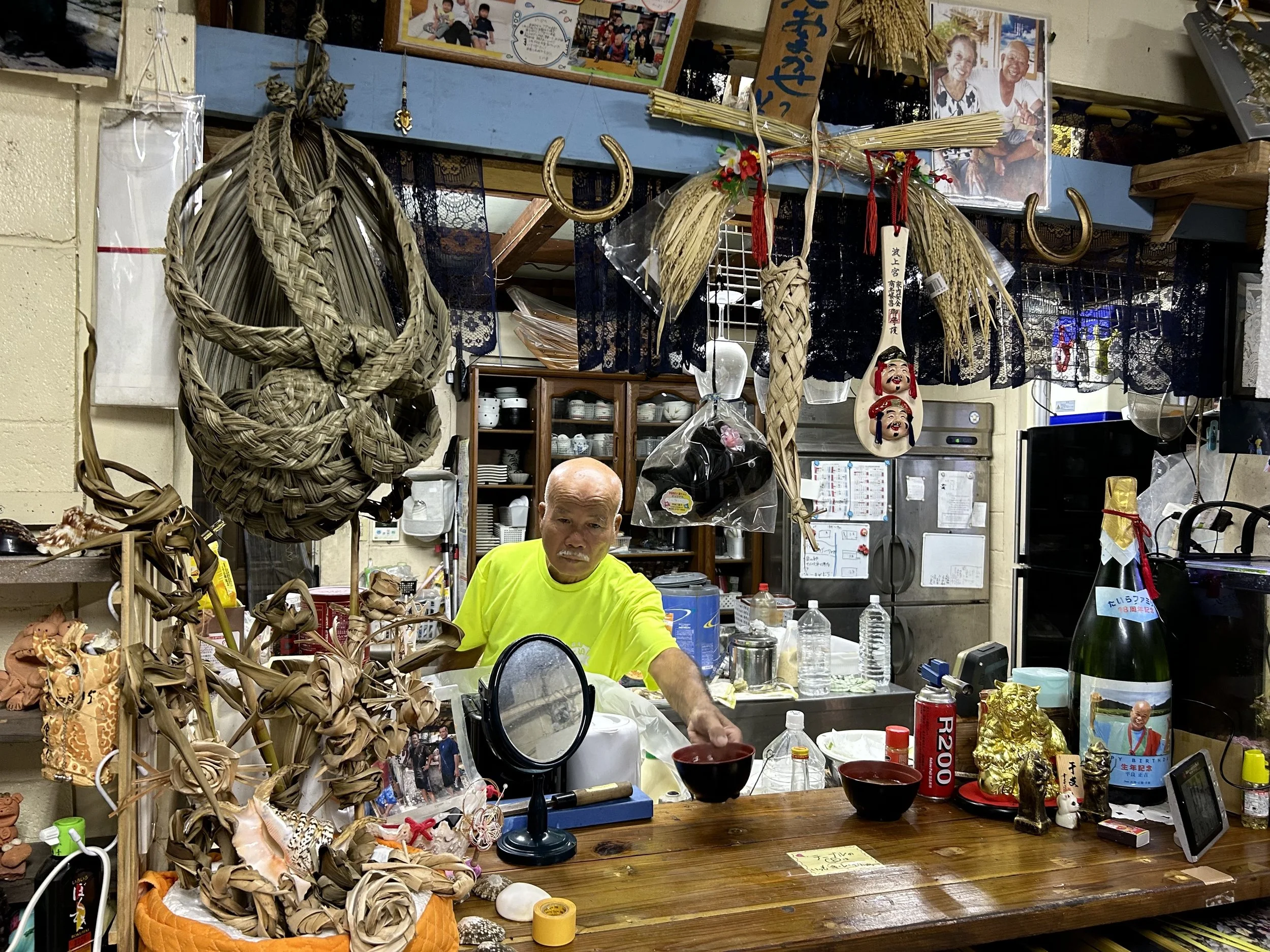
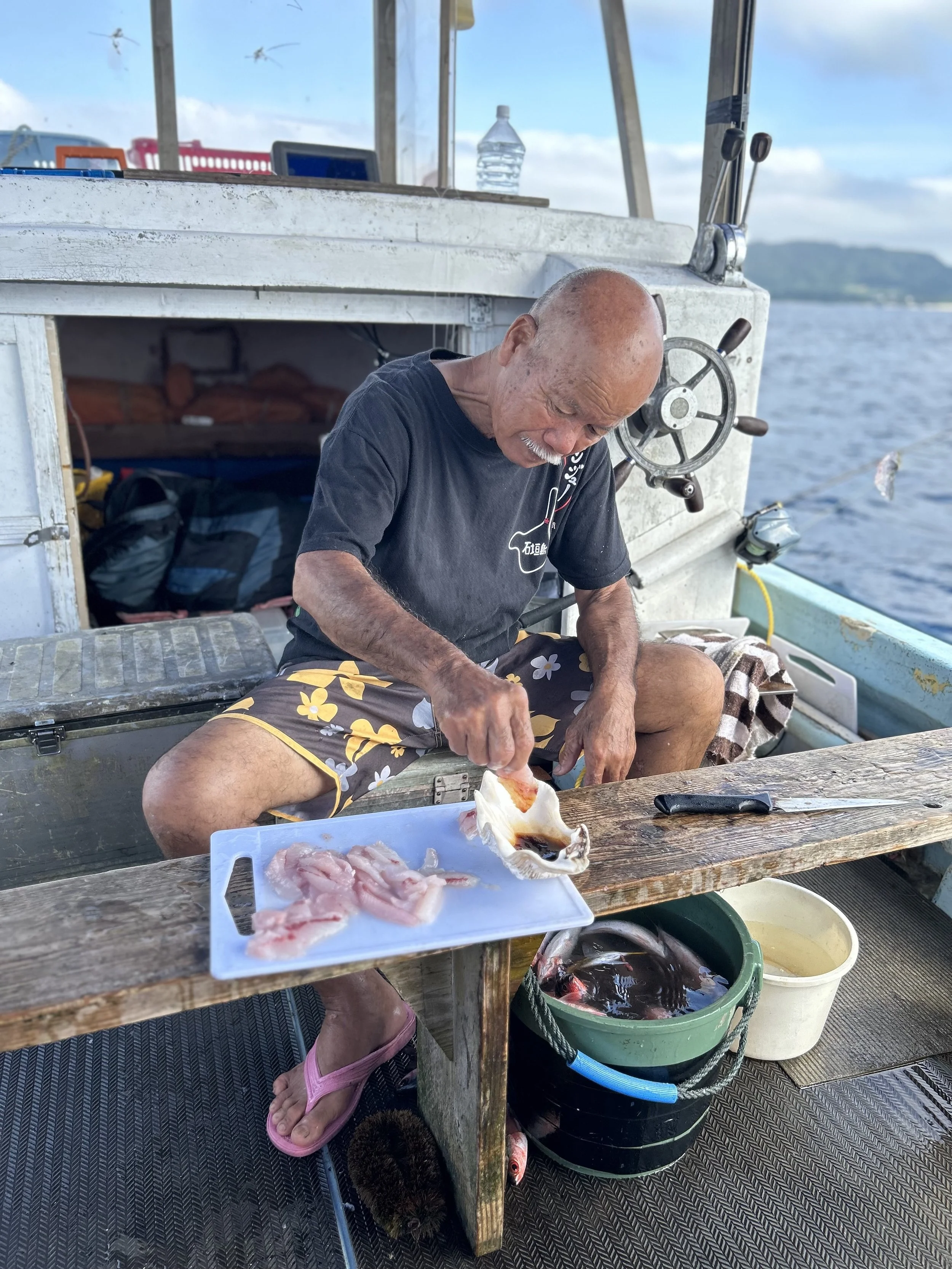
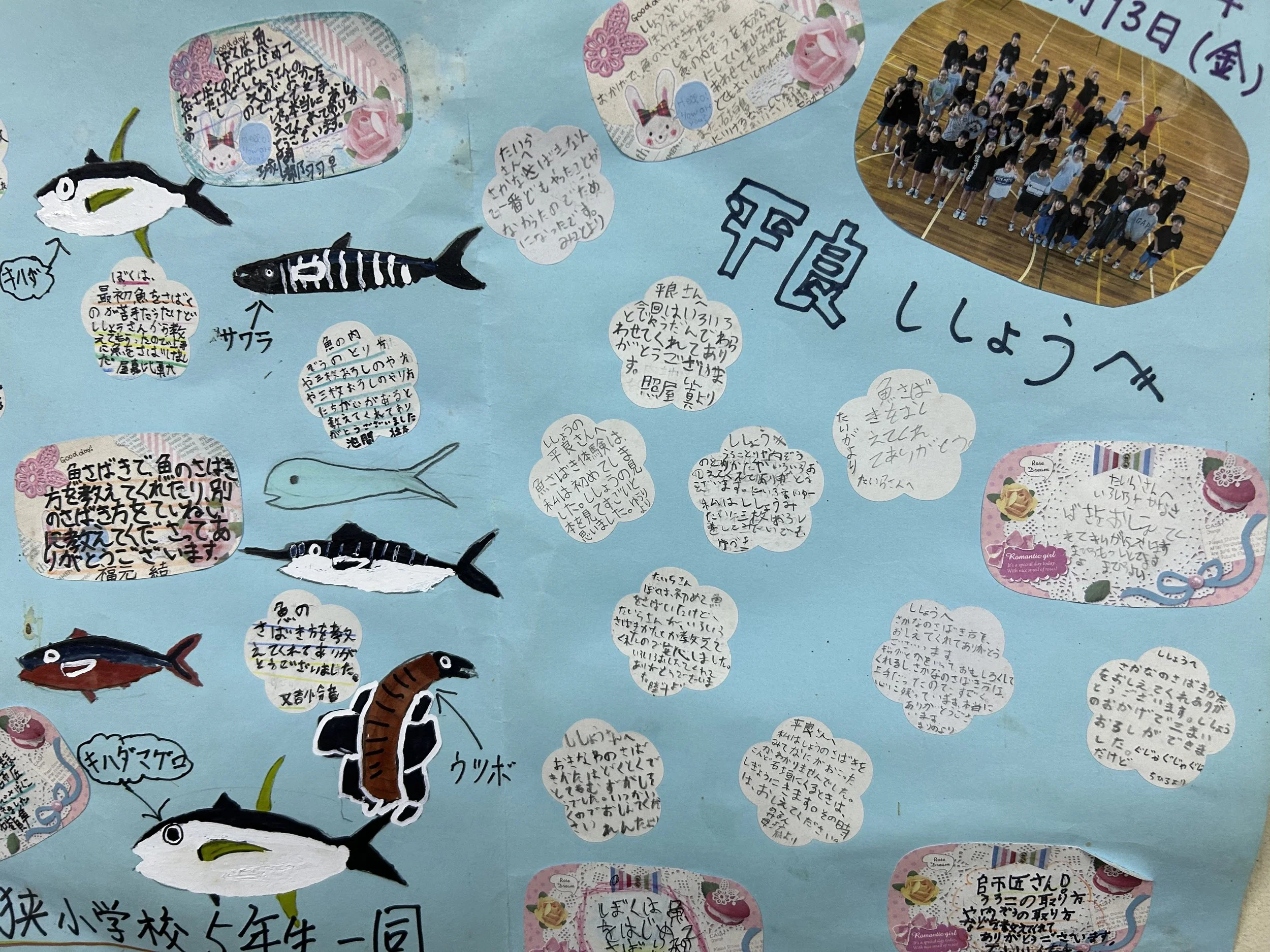
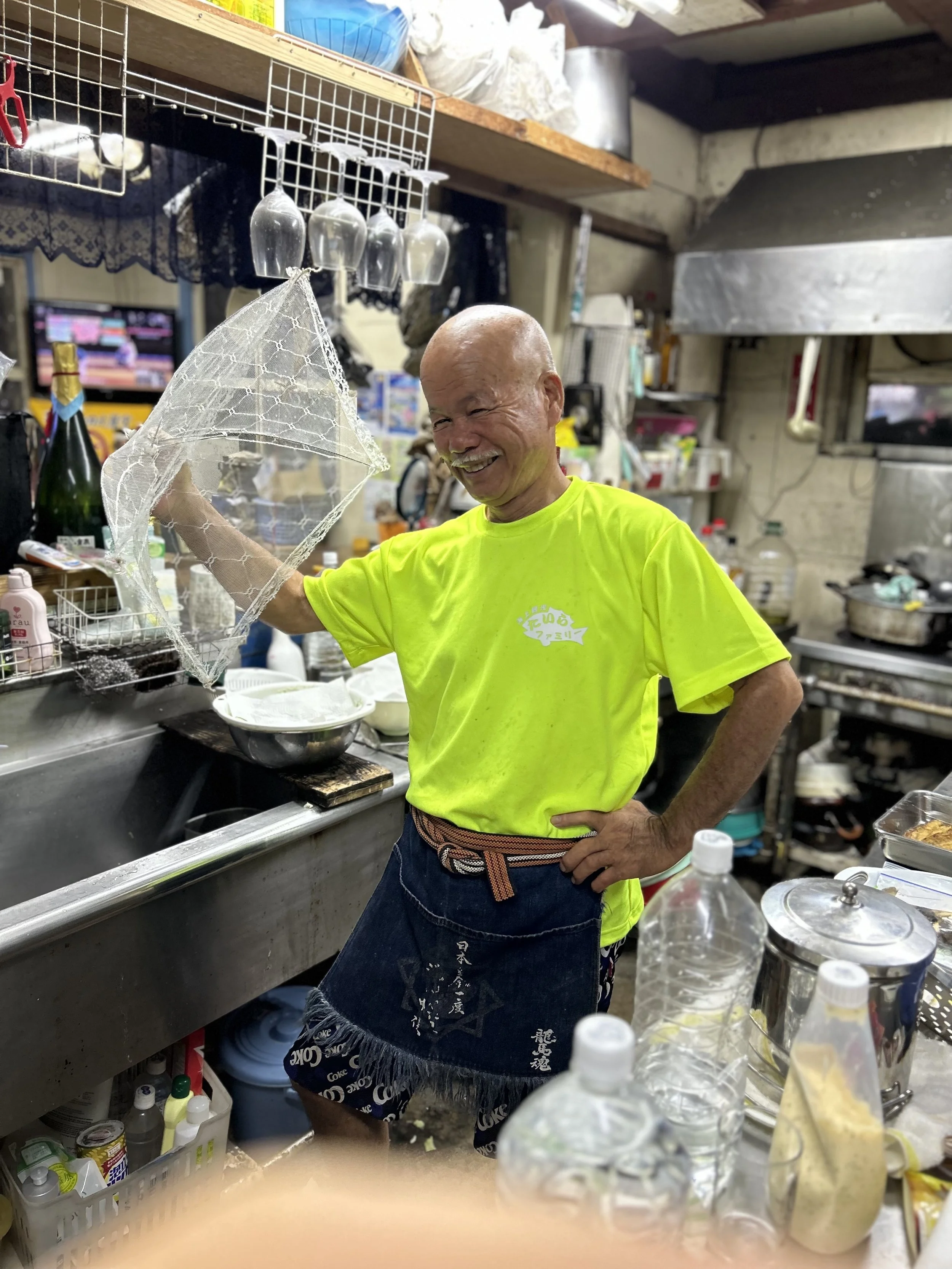
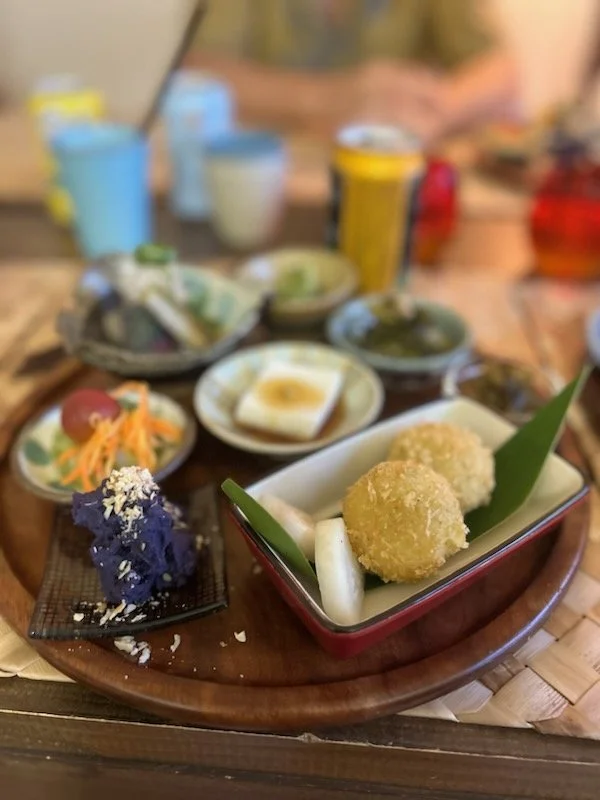
fish, stories and songs of morals and respect for the living ocean. Lighting up ideas and laughing eyes, our bellies and hearts full.
fish, stories and songs of morals and respect for the living ocean. Lighting up ideas and laughing eyes, our bellies and hearts full.
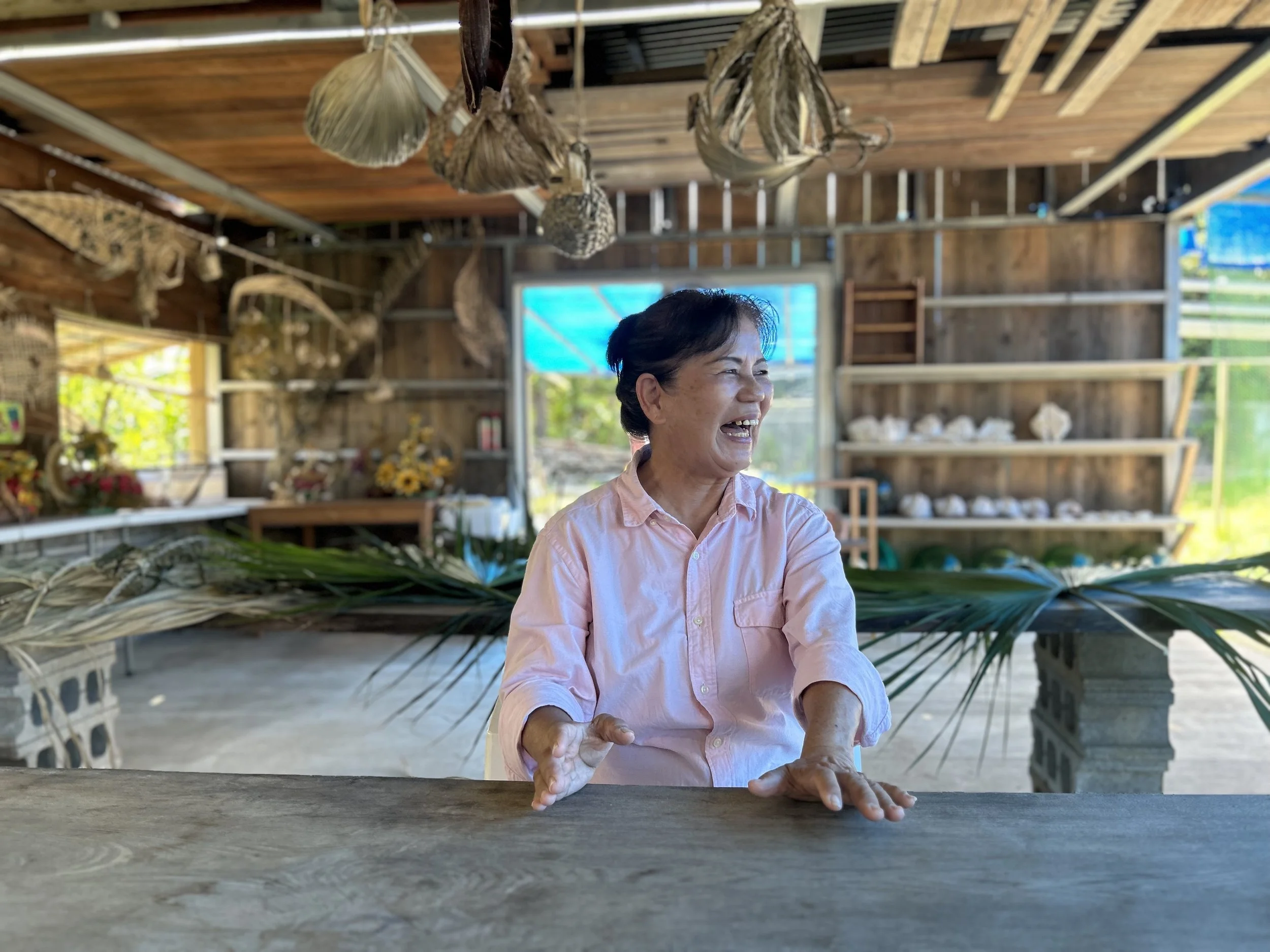
Community activator, plant weaver and invigorating spirit
Seeing into the relationships between people and plants and the ripple effect into the community and ecologies.
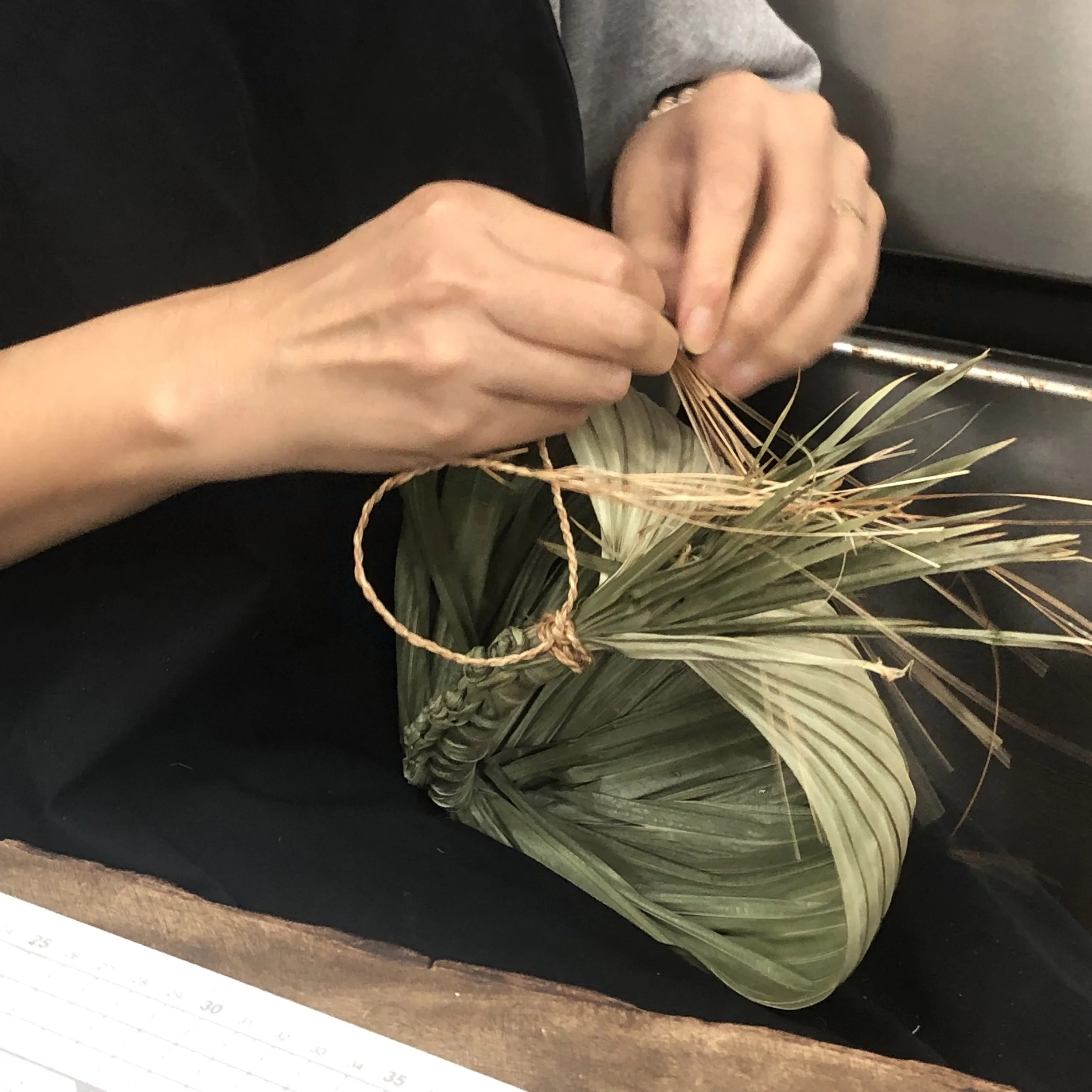
A hot afternoon with our fingers entwined in the kuba leaves, refreshing ourselves with the gettou leaf mist spritz, sitting with a community meastra as she weaves and tends to the tendrils of her village, the people nearby, and islands a little further, plant communities. We went looking for the phosphorescent flower community Yaeko San was tending to, alas nothing was alight.
This Ishigaki network of grannies! A force!
Seeing into the local relationships between people and plants and the ripple effect into community and ecologies.
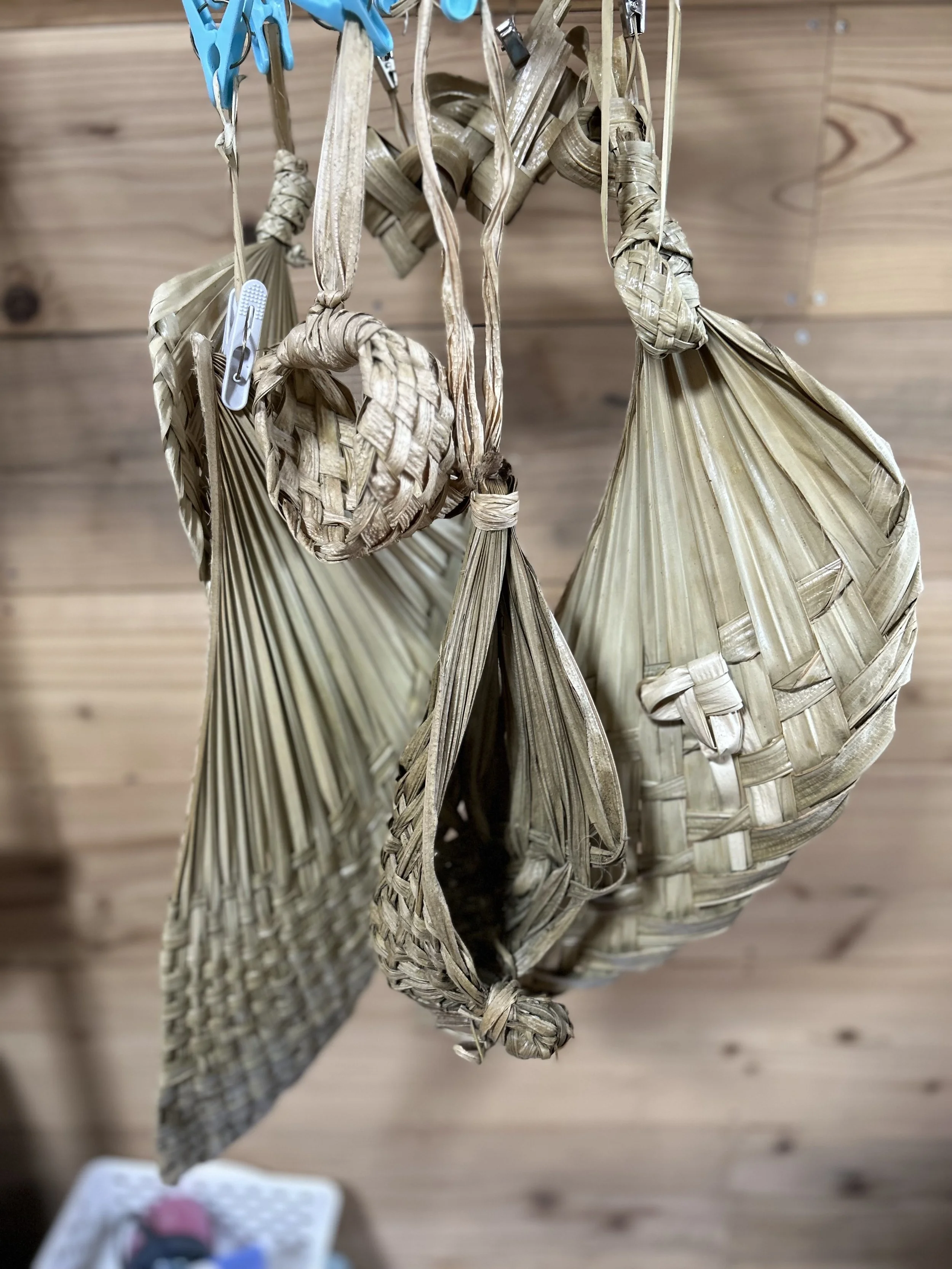
I’m always interested in water carriers; the plants and techniques that were once used to carry and distribute this vital element. From the bull kelp water carriers of First Nations in Australia to the experimental assemblages of Future Nostalgia. How do we have parity when it comes to access to water?
くば Kuba (Okinawan Language)
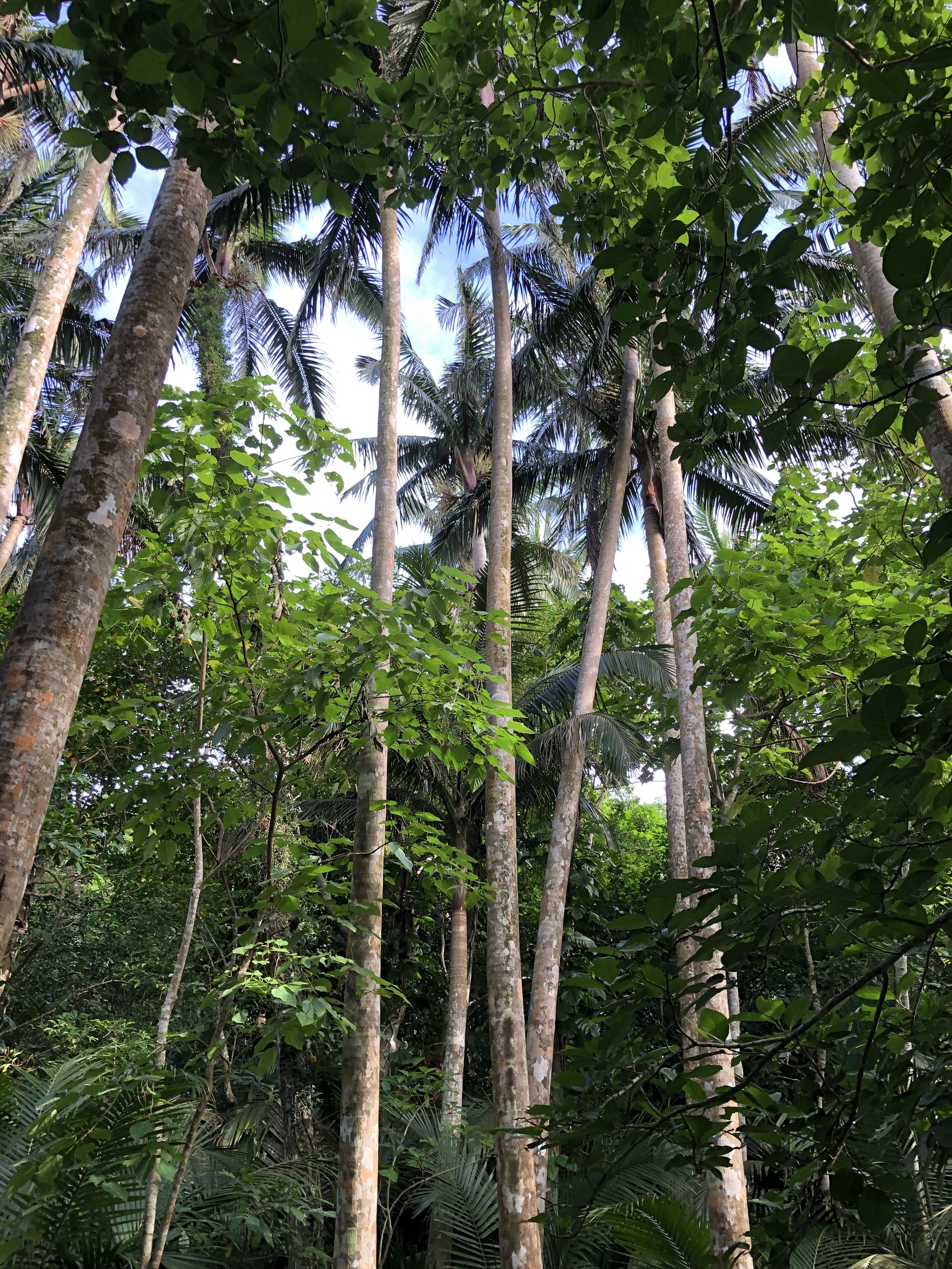
Chinese fountain palm (sp. Livistona chinensis) is a species of palm tree native to southern Japan, Taiwan and several other islands of the South China Sea.
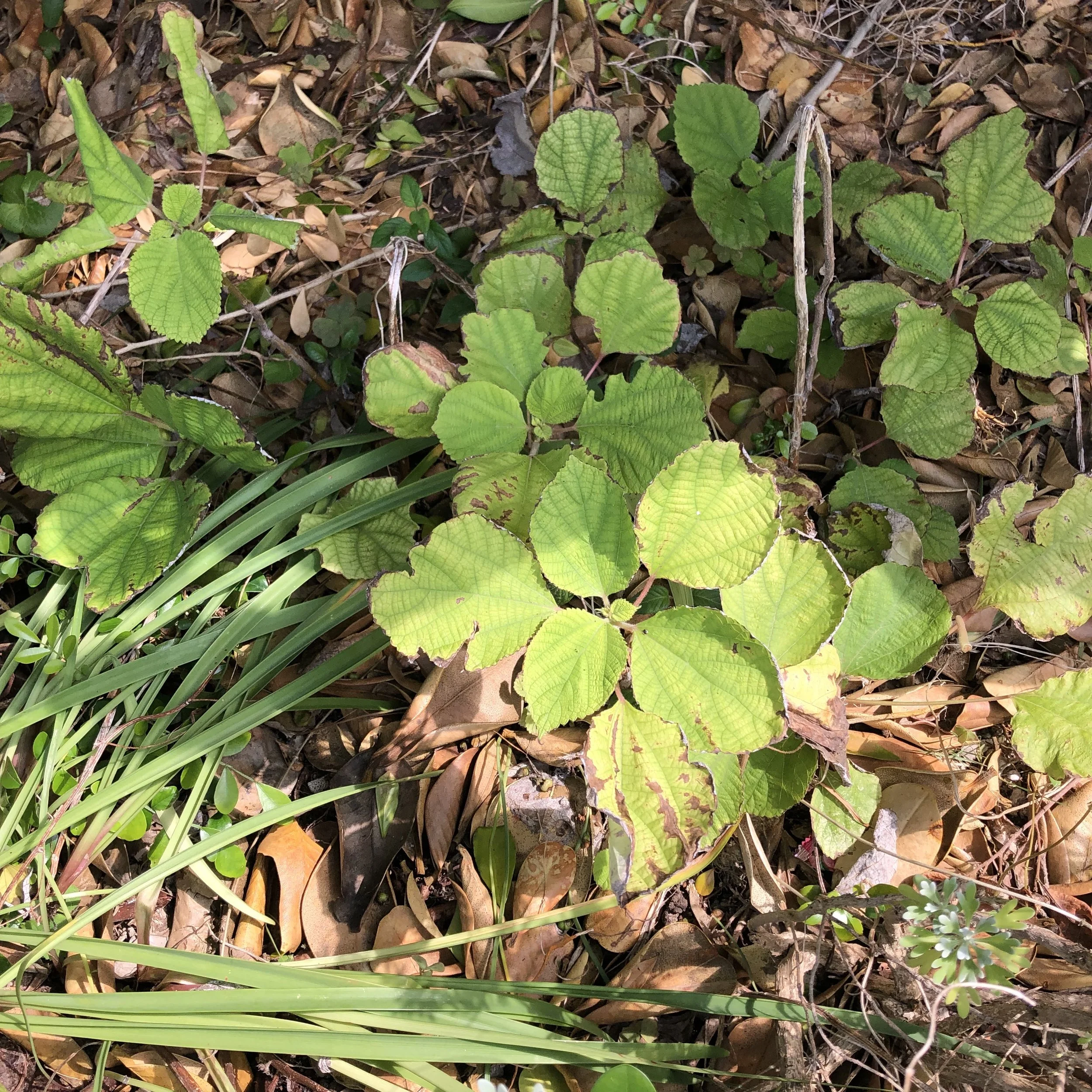
Gettou (local dialect of Ishigaki) or Sannin (dialect of Okinawa)
Alpinia zerumbet, commonly known as shell ginger, is a perennial species of ginger native to East Asia.
It is a plant that has been an essential part of life on Ishigaki since the old times. Its seeds are hung to repel insects, its leaves are boiled to extract the essential oils used to refresh and repel, as vegetables, the stems are woven into baskets and mats, and leaves are used for tea, mochi and steamed bun wrapping.
It is also used to mitigate red soil discharge, through a “greenbelt movement” to plant around farmlands whereby its dense roots prevent soil runoff into the ocean.
Due to its local popularity, Alpinia zerumbet has become the subject of study at the University of the Ryukyus in Okinawa. Personal local experience and review of the literature now suggest that shell ginger may contribute to longevity among the population in Okinawa. This is supported by its abundant phytochemical content, with antioxidant and anti-obesity properties.
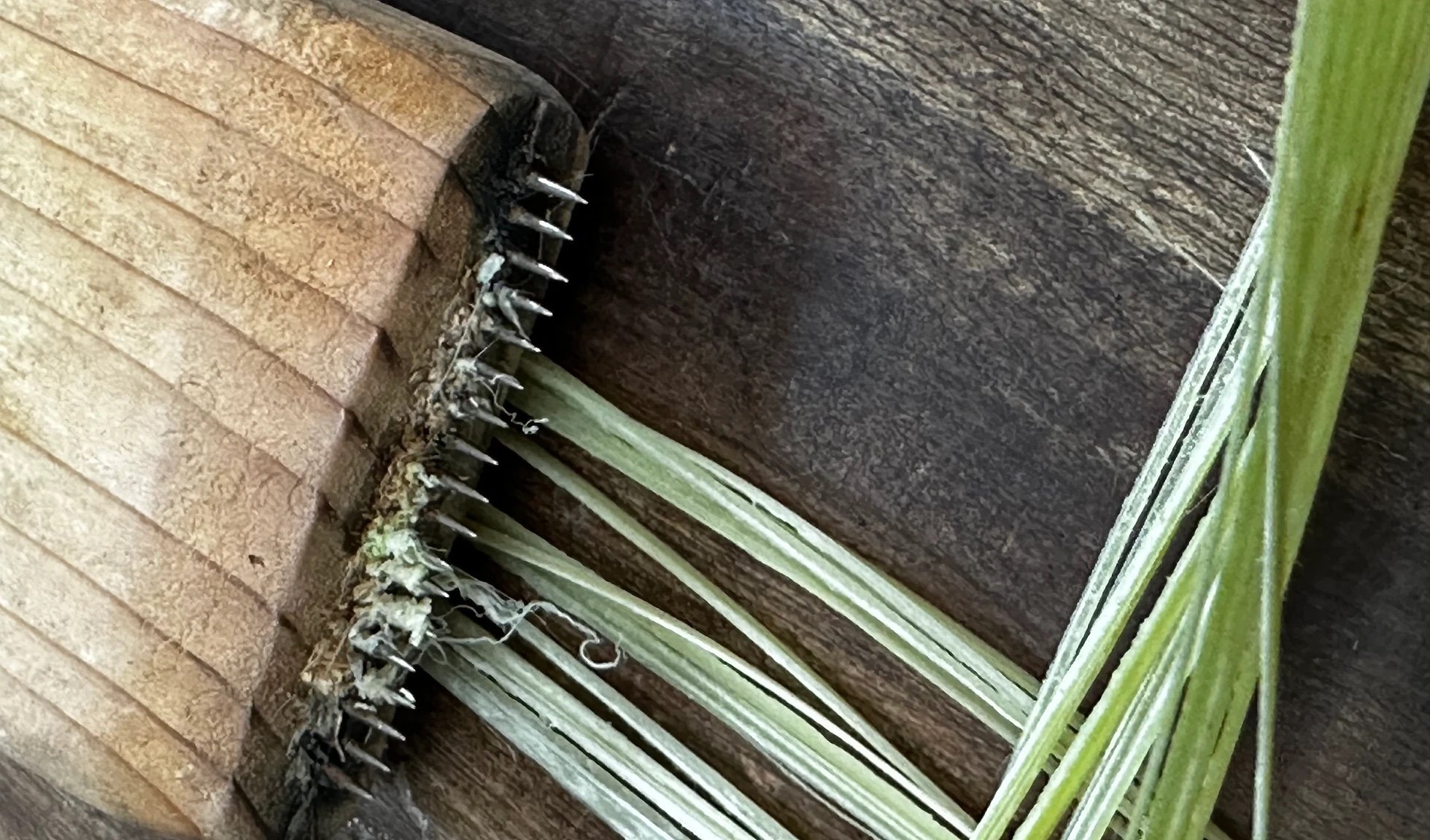
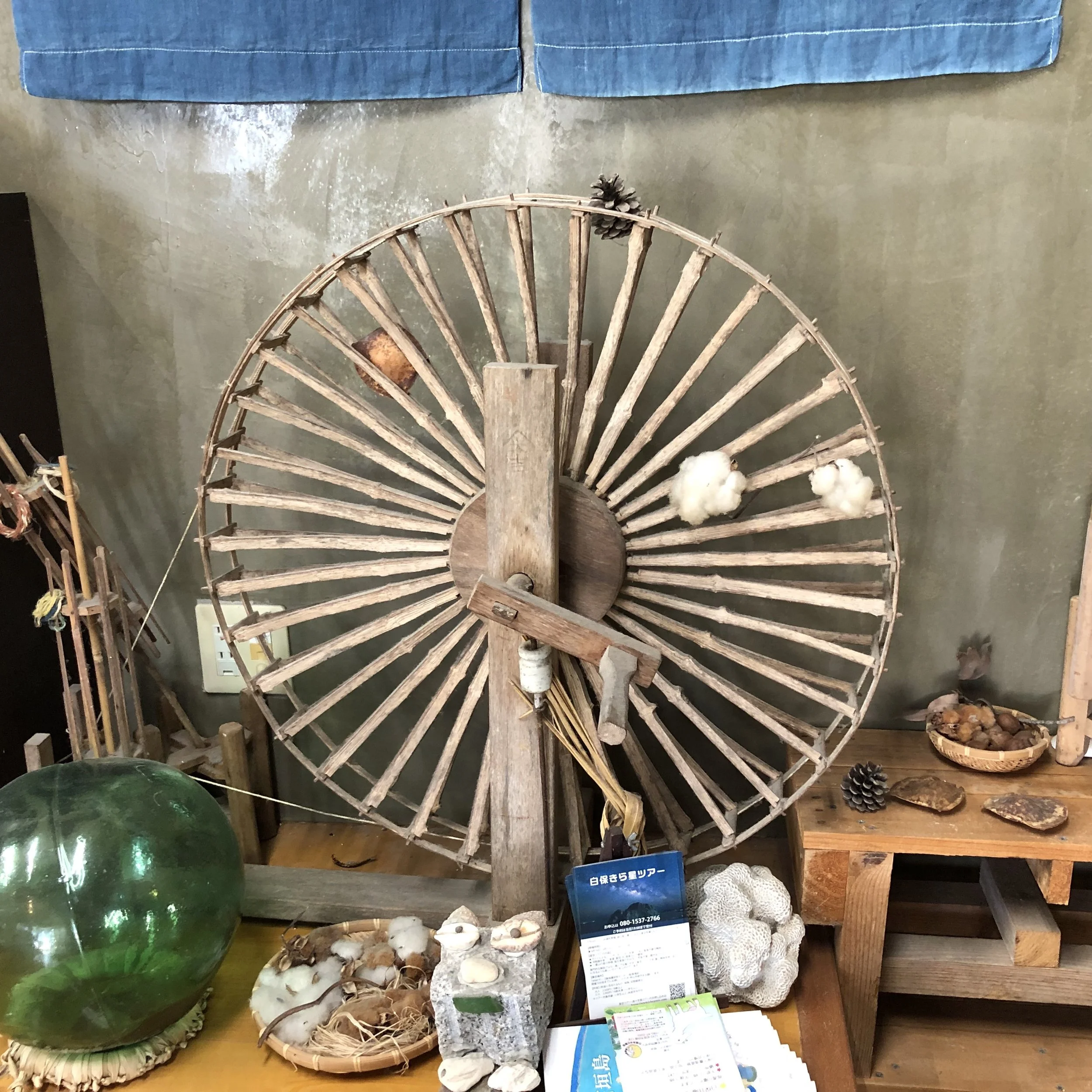
or carder, made by Tool Maker Uchida San
Seeing into the local relationships between people and plants and the ripple effect into community and ecologies.
I’m always interested in water carriers; the plants and techniques that were once used to carry and distribute this vital element. From the bull kelp water carriers of First Nations in Australia to the experimental assemblages of Future Nostalgia. How do we have parity when it comes to access to water?
くば Kuba (Okinawan Language)
Chinese fountain palm (sp. Livistona chinensis) is a species of palm tree native to southern Japan, Taiwan and several other islands of the South China Sea.
Gettou (local dialect of Ishigaki) or Sannin (dialect of Okinawa)
Alpinia zerumbet, commonly known as shell ginger, is a perennial species of ginger native to East Asia.
It is a plant that has been an essential part of life on Ishigaki since the old times. Its seeds are hung to repel insects, its leaves are boiled to extract the essential oils used to refresh and repel, as vegetables, the stems are woven into baskets and mats, and leaves are used for tea, mochi and steamed bun wrapping.
It is also used to mitigate red soil discharge, through a “greenbelt movement” to plant around farmlands whereby its dense roots prevent soil runoff into the ocean.
Due to its local popularity, Alpinia zerumbet has become the subject of study at the University of the Ryukyus in Okinawa. Personal local experience and review of the literature now suggest that shell ginger may contribute to longevity among the population in Okinawa. This is supported by its abundant phytochemical content, with antioxidant and anti-obesity properties.
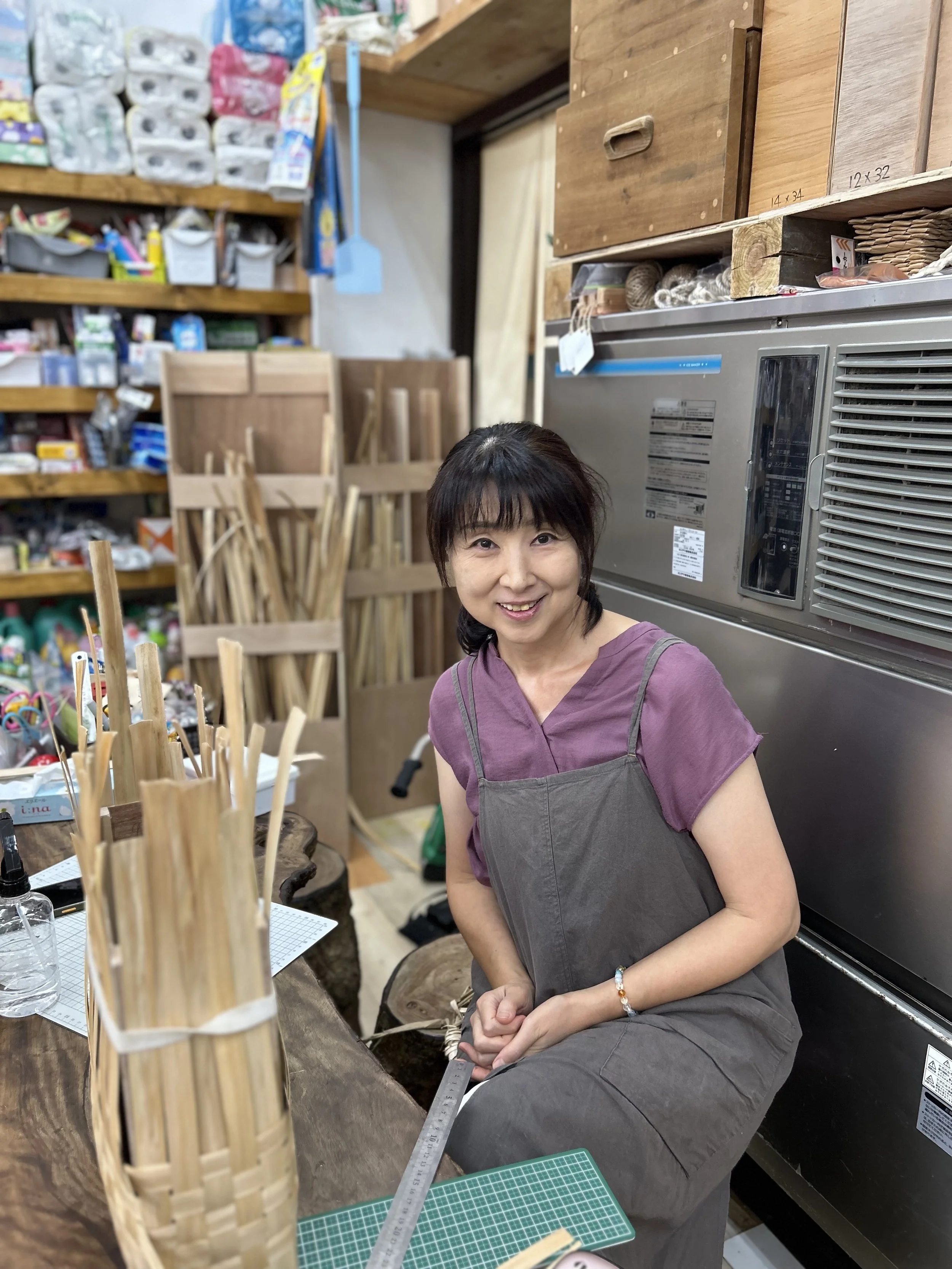
Master plant weaver of Yaeyama jofu Matsutake San, sharing her unique journey and contribution to your community in Shiraho.
Seeing into the relationships between people and plants and the ripple effect into the community and ecologies.
Jofu is the pinnacle of Japanese Asa (ramie) fabric, which for a long time used to be presented to the imperial court and families of the shogunate.
Yaeyama Jofu is made from ramie, a plant from the nettle family which grows to about a metre high, from which the fibre is attained. An incredibly time consuming process of separating and hand twisting the hair like thin strand fibres together by a network of grannies in preparation for the warp and weft threads
The dye used for Yaeyama jofu is taken mostly from the plants grown in Yaeyama including kuru, Fukugi tree, mangrove, Acacia confusa, and indigo.
The kuru has to be peeled and grated before being put in boiling water, which is strained to get the reddish brown dye. The leaves of Acasia confusa, which is an evergreen in the pea family, are boiled to make dye of multiple shades from pale to vivid yellow.
Indigo has to be soaked in water with branches still attached and the liquid is fermented with lime and saké to make the dye.
Ikat or kasuri is used to create the patterns in the warp faced textiles.
Jofu is the pinnacle of Japanese Asa (ramie) fabric, which for a long time used to be presented to the imperial court and families of the shogunate.
Yaeyama Jofu is made from ramie, a plant from the nettle family which grows to about a metre high, from which the fibre is attained. An incredibly time consuming process of separating and hand twisting the hair like thin strand fibres together by a network of grannies in preparation for the warp and weft threads
The dye used for Yaeyama jofu is taken mostly from the plants grown in Yaeyama including kuru, Fukugi tree, mangrove, Acacia confusa, and indigo.
The kuru has to be peeled and grated before being put in boiling water, which is strained to get the reddish brown dye. The leaves of Acasia confusa, which is an evergreen in the pea family, are boiled to make dye of multiple shades from pale to vivid yellow.
Indigo has to be soaked in water with branches still attached and the liquid is fermented with lime and saké to make the dye.
Ikat or kasuri is used to create the patterns in the warp faced textiles.
The dye used for Yaeyama jofu is taken mostly from the plants grown in Yaeyama including kuru, Fukugi tree, mangrove, Acacia confusa, and indigo.
The kuru has to be peeled and grated before being put in boiling water, which is strained to get the reddish brown dye. The leaves of Acasia confusa, which is an evergreen in the pea family, are boiled to make dye of multiple shades from pale to vivid yellow.
Indigo has to be soaked in water with branches still attached and the liquid is fermented with lime and saké to make the dye.
Ikat or kasuri is used to create the patterns in the warp faced textiles.
Jofu is created from the far south of Japan on Ishigaki Island to the far North.
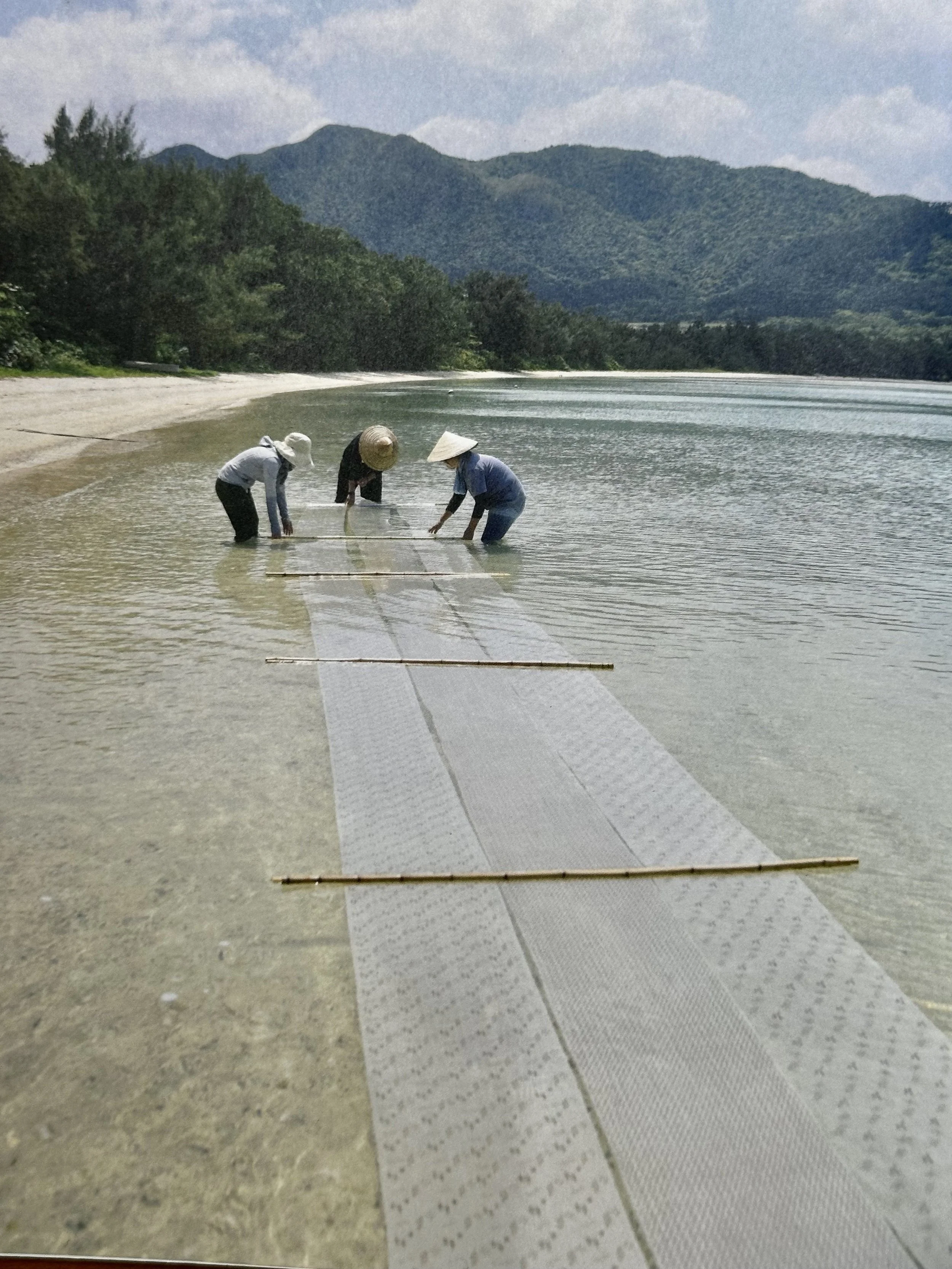
Although, I did not personally witness it, one particularly element that is phenomenal in the final process of creating the textile is to use a technique called umi-zarashi, or sea washing, in which the fabric is bleached by the sea, enriching the colour of the kuru (dioscorea rhipogonoides) dye.
Similarly in the North of Japan, in Shiozawa, which receives some of the highest snowfall at 2000 metres high, there is a process called yuki-zarashi. “ On sunny days in late winter, jofu fabric is placed on top of the Shiozawa snow, producing ozone that bleaches the vegetable fibers and whitens the fabric, intensifying the vividness of the colors.”
The fibres from the ramie plant are retrieved by scraping the stems with abalone seashells
These processes rely on a deep connection and understanding of the natural surroundings, creating cultural materials that are co-created or in collaboration with the ecological entities and phenomena lived with.
beach collected buoys, plant fibres
buoy, tatami fibre, palm
beach collected buoy, coral, string
coral, dried palm
stone, shell, discarded aluminium teapot
stone, wood, coral
Introductions
beach bouy, local plant fibre
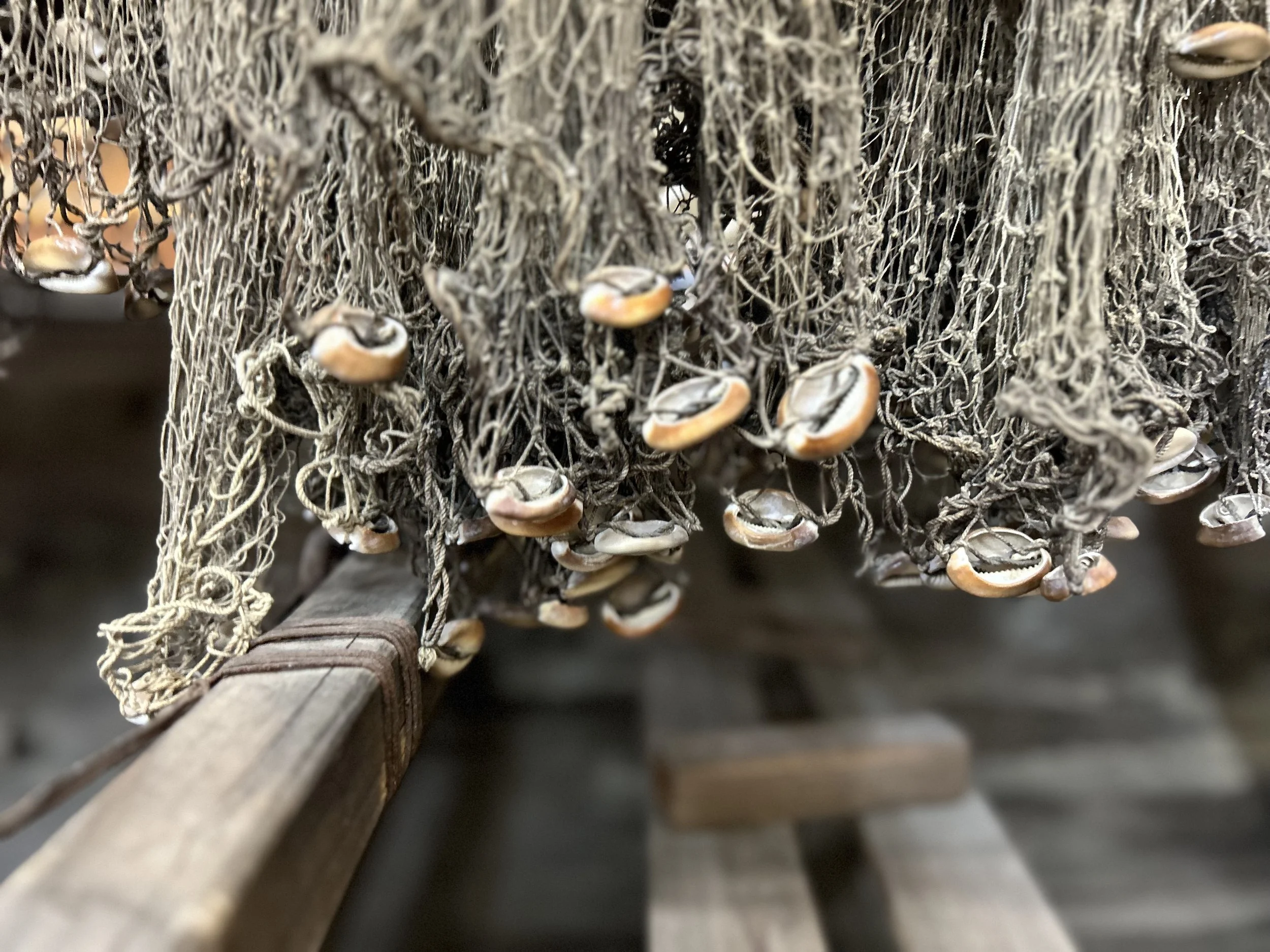
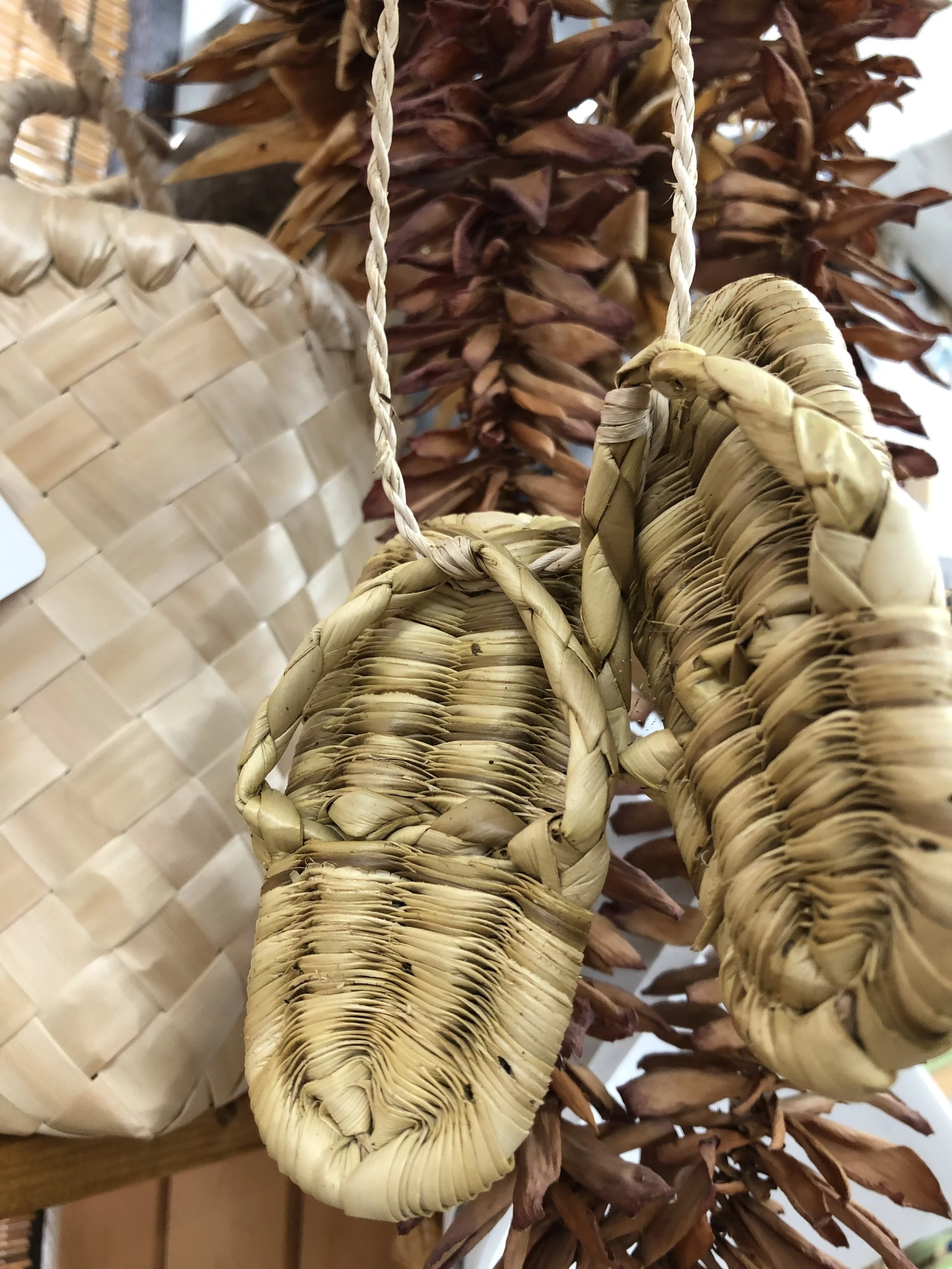
Cowrie shell weights, palm frond water carriers, ramie sheath textiles, gettou leaf cloaks, shell knives, wooden goggles.
Seeing into the past and present relationships between the sea, plants and people of Ishigaki.
THANKS ISLAND
“To be free.
To be a good partner with nature next to us.
To feel joy in the living.
To be a challenger with full of curiosity.
Then and now the Islands craftsmanship has been carefully fostered.
Like a mirror which shows us how our living is supposed to be.
Until now and from now on,
We’ll live with beautiful nature of unique heartiness.”